🛤️ The Future I Thought We'd Have
On grief, imagined futures, and the fingerprints people leave behind. A reflection on the futures we lost and the love that remains.
THE SPACE BETWEEN 🌌
Mariagrazia Colletti
5 min read
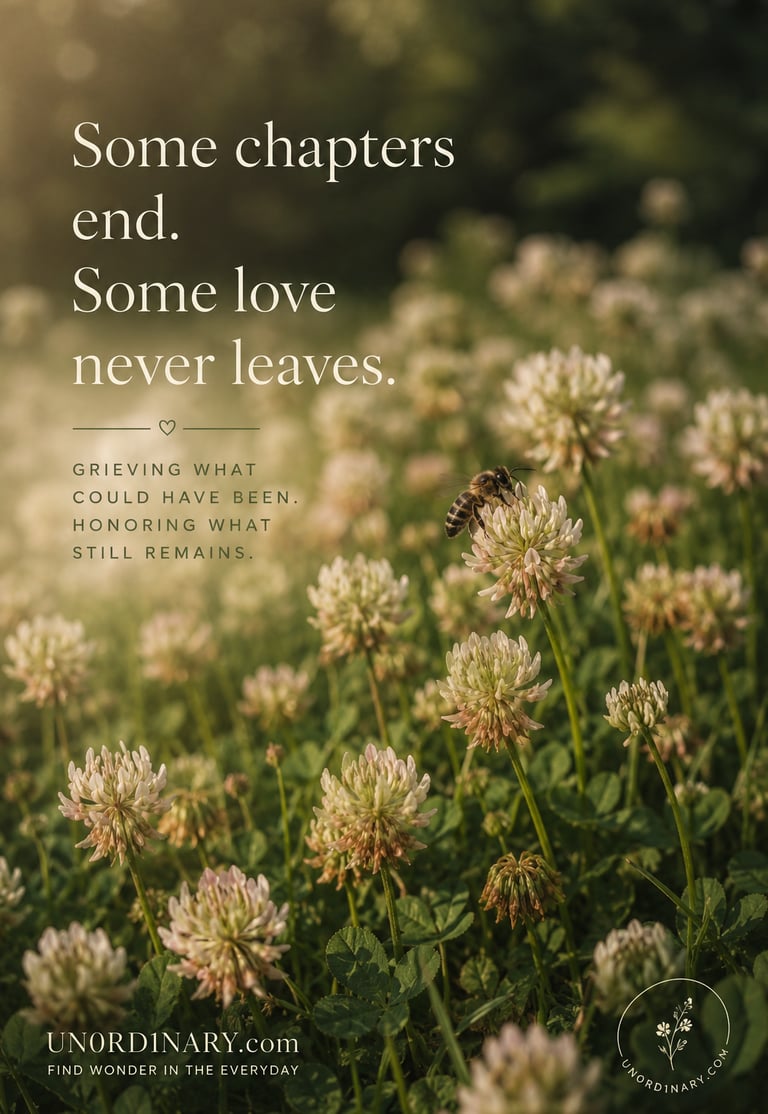
People often talk about grieving the person who died.
What they don't talk about nearly enough is grieving the future that died with them.
The conversations that never happened.
The traditions that never formed.
The phone calls that were never made.
The stories that were never shared.
The photographs that were never taken.
The version of life you assumed was waiting for you.
When my mom died, I grieved her.
But over time, I realized I was grieving something else too—I was grieving the future I thought we'd have.
Every beautiful thing that has happened since her death still carries an ache.
Not because those moments aren't joyful.
Because they are.
But because I instinctively reach for the person I want to share them with.
A funny thing one of my children said.
A milestone.
A photograph.
A new project.
A beautiful moment in the garden.
A piece of good news.
For a split second, I still think:
I can't wait to tell Mom.
And then comes the reminder that I can't
At least not in the way I once imagined.
The Relationship That Was Still Becoming
What surprises me most is that my grief isn't centered around childhood.
It's centered around adulthood.
As I got older, our relationship was changing.
The distance that often exists between mothers and teenage daughters was beginning to soften as I entered adulthood.
We were finding our way toward one another differently.
Not just as parent and child.
But as two women.
Two adults.
Two people beginning to understand each other in new ways.
We were standing at the edge of a season I believed would become one of the richest chapters of our relationship.
Cancer took her just eight months after her diagnosis.
Just like that, everything that was still becoming, became what could never be.
She was fifty-five years young.
Sometimes I think that's the part that hurts most.
Not just grieving the memories we had.
But grieving the memories we'll never get the chance to make.
I'll never know what kind of grandmother she would have become.
I'll never know what sixty looked like on her.
Or seventy.
I'll never know what conversations we would have shared as my children grew older.
I'll never know what advice she would have offered.
Or what new layers of friendship might have emerged between us.
Those futures exist only in imagination now.
And grief has a way of revisiting them.
Again and again.
The Future She Lost Too
There is another layer of grief that I rarely know what to do with.
It's not only grieving the future I lost.
It's grieving the future my mother lost.
One of the last things I remember her saying was that she wasn't ready to leave us.
She wasn't only grieving her own life.
She was grieving the lives she wouldn't get to witness.
A newly married daughter.
A newly engaged son.
Future weddings.
Future grandchildren.
Future holidays.
Future ordinary moments she assumed would still be waiting for her.
I remember seeing the fear in her eyes.
Not fear of death itself.
Fear of leaving.
Fear of being separated from the people she loved.
Fear of missing the chapters that had not yet been written.
That memory has stayed with me every single day.
And becoming a mother hasn't changed my understanding of it.
It has deepened it.
Because there is something almost impossible to put into words about imagining the people you love continuing without you.
The hardest part of leaving is often what we leave behind.
I think about the way she prayed.
How she would pray for everyone else before praying for herself.
How she worried about us even while carrying the weight of her own diagnosis.
And if I'm honest, there are moments when I still feel angry.
Moments when it feels like the world failed her.
Like life asked too much of someone who had already given so much.
I don't always know what to do with that feeling.
Maybe there is nothing to do with it.
Maybe some heartbreaks aren't meant to be solved.
Maybe they are simply carried.
What I do know is this:
The depth of her fear wasn't evidence of weakness.
It was evidence of love.
She wasn't afraid because she loved life too little.
She was afraid because she loved it so much.
Because there were still people she wanted to see become who they were meant to be.
Still memories she wanted to make.
Still chapters she wanted to witness.
And perhaps that is why her absence can still feel so large.
Not because her story mattered only while she was here.
But because her love extended so far into a future she never got the chance to see.
Meaning Is Not the Same as Justification
Loss also creates questions that don't have answers.
Would certain relationships in my life be what they are today if she were still here?
Maybe.
Maybe not.
It's impossible to know.
The uncomfortable truth is that loss often rearranges people.
Not because the loss was good.
Not because it was necessary.
Not because it was fair.
But because human beings adapt around wounds.
Sometimes an absence creates spaces that weren't there before.
Conversations happen.
Relationships deepen.
People become closer in ways no one would have chosen, yet somehow still become real.
This doesn't mean the suffering was justified.
And it certainly doesn't mean it was meant to happen.
It simply means that something meaningful emerged despite it.
Those are very different things.
Meaning is not the same thing as justification.
Finding something valuable in the aftermath does not make the wound any less real.
It simply means that life continues to grow, even in places we would never choose.
For a long time I struggled with that distinction.
How could I acknowledge what emerged without feeling as though I was betraying what was lost?
But both can exist.
We can hate what happened.
Wish it never occurred.
Grieve what should have been.
And still acknowledge the ways it changed us.
The ways it shaped our relationships.
The ways it revealed strengths, perspectives, and connections that may never have surfaced otherwise.
The Fingerprints People Leave Behind
Lately I've been thinking about all the ways my mother remains present despite her absence.
I see her in my love for plants.
In the things that catch my attention.
In the way I nurture.
In the way I care for others.
Sometimes I wonder how many parts of me were quietly shaped by her without either of us realizing it.
Maybe grief is learning that someone can be absent and present at the same time.
Gone from the places we expect to find them.
Yet somehow still woven into who we've become.
People leave fingerprints inside us.
Not because they stay physically.
But because love leaves traces.
It echoes.
It lingers.
It becomes part of how we move through the world.
The older I get, the more I see those fingerprints everywhere.
In my children.
In my garden.
In my curiosity.
In the way I notice things.
In the way I love.
For a long time I thought grief was asking: Why wasn't there more time?
Now I find myself asking a different question...
Where is she still showing up?
And the answer surprises me.
She's there more often than I expect.
Not in the ways I once imagined.
But in the ways that matter.
Because while her chapter ended, her influence didn't.
Her life continues rippling outward through the people she loved.
Through the people she shaped.
Through the parts of her that became part of us.
Not everything survives time.
But love has a strange way of finding new forms.
And perhaps healing begins when we stop looking only at what ended and start noticing what remains.
What Remains
Privacy Policy — Terms & Conditions — Community Guidelines — Contact Us
Copyright©️2025, UN0RD1NARY, Mariagrazia Colletti, All Rights Reserved.